The flower’s green life force
Handling the UndeadThe flower’s green life force is the name Gustav Mahler gives to the generative power he senses beneath the return of Elias Mahler, who had been dead and withered. The idea begins not as a scientific explanation but as a question, then gathers force through images of seeds sprouting, plants reaching toward light, and a child learning to stand. Its decisive claim is that life can be taken away and given back: loss is real, but it is not inevitable.
A power without a settled explanation
The concept emerges from Gustav Mahler’s effort to understand what happened to Elias Mahler. Elias had been dead and withered, and, as Gustav Mahler recognizes, rain alone could not have brought him back. The question is twofold: what restored Elias, and what continues to sustain him when he seems empty inside? The flower’s green life force names the possibility that life depends on a power not fully accounted for by ordinary observation. It does not provide a mechanism or resolve the mystery; it gives Gustav Mahler a way to frame what he cannot explain.
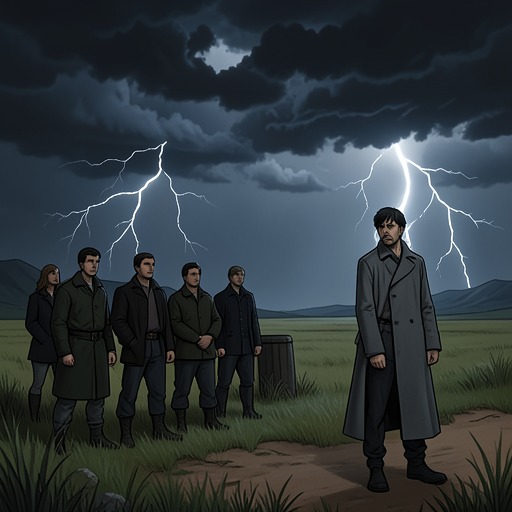
The surrounding setting makes the question especially immediate. After stepping onto the patio, Gustav Mahler experiences the air as newly rich and nourishing following a long drought, while the darkness bears the scents of a landscape restored by the downpour. That renewal supplies a concrete contrast for his thoughts, but the distinction remains important: the rain has revived the landscape, whereas Elias’s return came through something else. The natural scene prompts the inquiry without furnishing a literal answer. The flower’s green life force is therefore at once an image drawn from nature and a name for a power whose relation to Elias remains uncertain.
Seeds, effort, and the pull of light
Gustav Mahler’s first model is the seed. A seed can lie dormant for hundreds or thousands of years, dried out or frozen in a glacier, and then sprout when placed in moist earth. The image holds apparent lifelessness and latent capacity together: dormancy need not be the same as final extinction. By setting this possibility beside Elias Mahler’s return, Gustav Mahler finds a natural analogy for life persisting through conditions that look incompatible with life. The analogy suggests, but does not prove, that a comparable potential exists in human beings.
That thought develops into a rapid sequence of images. A blade of grass breaks through its seed casing and struggles toward the surface; a sunflower strives toward the sky and turns toward the light; a small child pulls itself upright and reaches out jubilantly. The images do not depict life as passive endurance. Each involves movement, exertion, and an orientation toward what sustains it. Their progression also enlarges the idea: growth moves from a plant’s emergence to a human child’s first effort to stand, linking different forms of living without claiming that they are identical. The green force is thus not merely greenery or a decorative metaphor. In Gustav Mahler’s vision, it names a drive expressed through the work of living things as they press into existence and toward light.
From metaphor to possibility
The thought culminates in the stark assertion, “It is not inevitable.” The line changes the weight of the seed and growth imagery. Dormancy, death, and apparent emptiness no longer lead automatically to a single conclusion; the possibility of return remains open. Gustav Mahler’s ensuing formulation makes the idea less like a guarantee than a precarious condition: “Everything is effort, work. A gift. It can be taken from us. It can be given back.” Life is not portrayed as something permanently secured by an unseen force. It can be lost, and any restoration remains a gift rather than an entitlement.
This qualification keeps the concept from becoming easy reassurance. The seed’s capacity to sprout offers an analogy for survival, but the passage does not establish that every dead person can return, explain how Elias was restored, or promise that his condition will endure. Instead, it joins strenuous effort to vulnerability: the blade of grass must break its casing, the sunflower must turn toward light, and the child must pull itself to its feet, while life remains something that can be taken away. The force names possibility under threat, not immunity from loss.
Significance in Gustav Mahler’s reflection
The flower’s green life force gives shape to a moment of recognition without closing off the mystery that produced it. Gustav Mahler moves from a practical question about what keeps Elias Mahler alive to a larger reflection on what life itself requires. The images let him think through that question in stages: dormant seed, emerging grass, striving sunflower, rising child. Each image offers a visible instance of life reaching beyond apparent limitation, yet none turns the return from death into a settled natural law.
The concept’s significance lies in holding hope and uncertainty together. Elias Mahler’s return makes the possibility of restored life concrete for Gustav Mahler, while the words “It is not inevitable” extend that possibility beyond Elias without defining its limits. The final emphasis on life as effort and gift prevents the vision from erasing vulnerability. The flower’s green life force is therefore both an interpretive answer and a measure of what remains unknown: it names the power Gustav Mahler senses, while leaving its source, operation, and reach unresolved.